The Guitarist-Composer, Episode 1: Reforging a Vivaldi-Inspired Rock Song
In the first episode of The Guitarist-Composer, I begin documenting a major current project: the reforging and rerecording of one of the oldest compositions in my catalogue, Teutonic Knights. The original composition remains fundamentally intact, but I am enriching portions of the score, adapting the piece for vocals, and completely rerecording it according to my present musical and production approach.
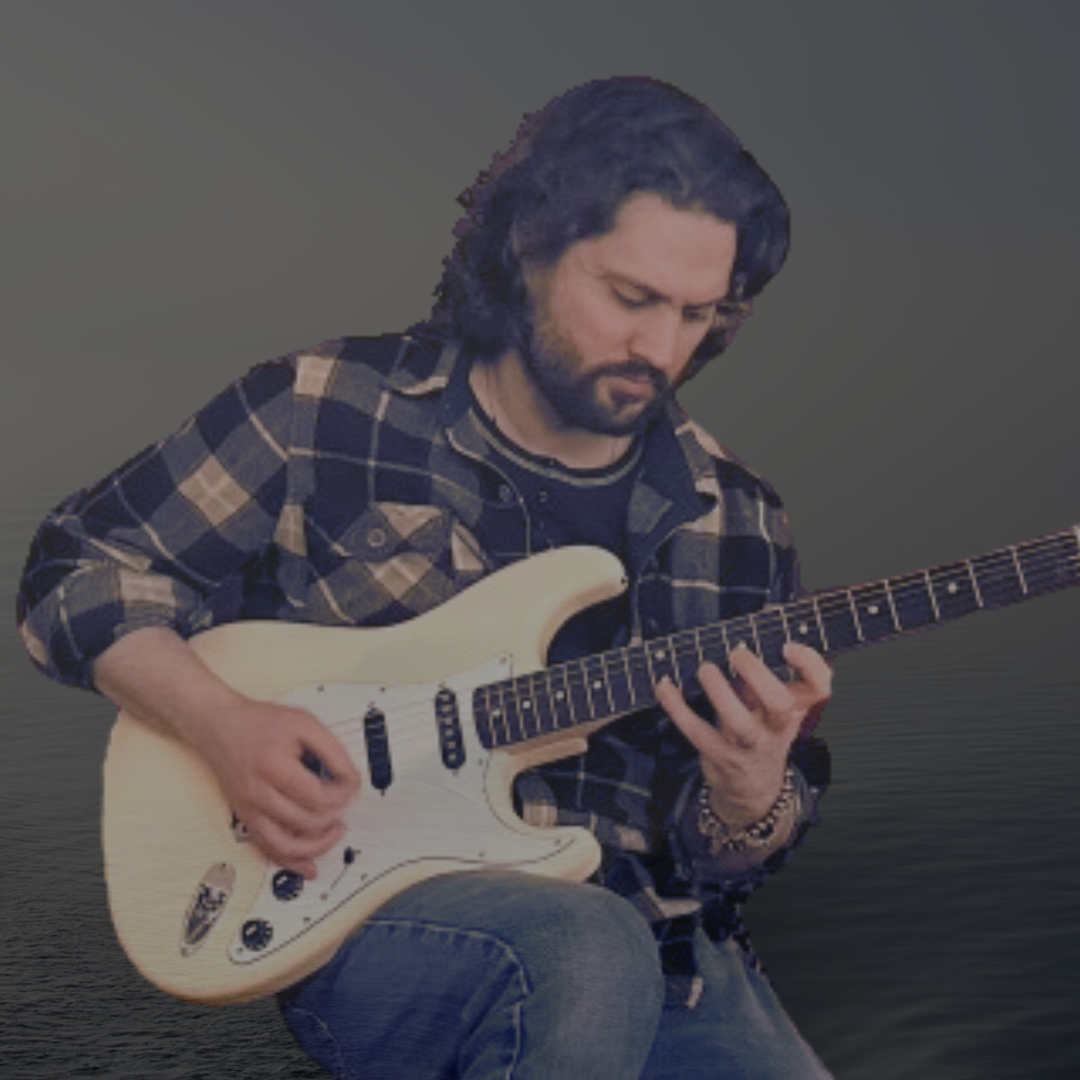
The format is deliberately informal and practical. While restringing and setting up the same Stratocaster I intend to use for the new recording, I discuss the history of the piece, the development and enrichment of its score, my approach to recording and guitar tone, and my first serious move from purely instrumental music into vocal music.
Contents
- Reforging Teutonic Knights
- From Instrumental Music to Vocals
- Composition, Counterpoint, and Early Music
- Stratocaster Setup, Tone, and Recording
- Revisiting the Production
- Musical Economy and Variety
- Related Material
- Private Online Guitar and Composition Lessons
Reforging Teutonic Knights
Teutonic Knights has a considerably older history than its eventual appearance on my debut album, Christendom Reborn. When I originally wrote and recorded the piece, I tended to work at a feverish pace. A score might be written in a matter of hours, followed by a complete recording within a day or two.
When I recently returned to the piece, I found that the original musical ideas still held up extremely well. However, I had to practically mount an archaeological dig to unearth the original score. When I finally found it, it proved rather skeletal, containing little more than what I had needed to guide myself through the original studio sessions.
The composition itself, however, stands up remarkably well. My purpose has not been to rewrite Teutonic Knights, but to enrich and more fully realize what was already there. This is especially true of the Vivaldi-inspired guitar solo, where I have added counterpoint and orchestration that were not present in the original version.
Further changes followed my decision to transform Teutonic Knights from a purely instrumental guitar piece into a work with vocals. That new direction has required some reconsideration of the arrangement while leaving the fundamental composition intact.
From Instrumental Music to Vocals
The most significant development is the addition of vocals. My recorded work has traditionally been instrumental, but the new version of Teutonic Knights will be my first serious foray into vocal music.
I initially prepared a new score for an expanded instrumental version. After deciding to pursue vocals, I created a second version of the score built around that new direction. Interestingly, this led me back toward portions of the original arrangement. The earlier introduction, for example, ultimately proved better suited to the vocal version than the newly composed instrumental introduction.
The vocal writing will lean strongly into the identity of Christendom Reborn, including explicitly theological lyrical content and a substantial choral role. I am still working out some details of the arrangement, and later episodes of The Guitarist-Composer will document that process as it develops.
Composition, Counterpoint, and Early Music
The guitar solo in Teutonic Knights is particularly important to the composition. It remains firmly rooted in rock and heavy metal, but its musical construction draws strongly upon Baroque principles and, in particular, the influence of Vivaldi.
In the new score, I have enriched portions of the solo with additional counterpoint and orchestration while leaving its fundamental musical material intact.
For a detailed look at the musical construction of the solo, see my measure-by-measure analysis of the Vivaldi-inspired guitar solo from Teutonic Knights . There I examine how the solo develops through motive, variation, register, rhythm, phrasing, arrangement, and orchestration.More broadly, the episode touches upon the way I combine rock guitar with Medieval, Renaissance, and Baroque traditions. This is not simply a matter of adding historical color to an otherwise conventional modern composition. Some pieces employ the modern tonal system while drawing upon Baroque procedures; others, such as A Yankee in Sleepy Hollow , make much more direct structural use of the kinds of modal practices associated with Renaissance music.
I nearly always begin with a score. Although many ideas originate on the guitar, notation allows me to see the entire composition at once and develop relationships between sections, voices, motives, and registers that are more difficult for me to judge when simply assembling blocks inside a DAW.
Stratocaster Setup, Tone, and Recording
Throughout the episode, I restring and work on my main Stratocaster—the same guitar I intend to use for the forthcoming recording.
The instrument has a 7.25-inch fretboard radius, graduated scalloped frets, a large 1970s-style headstock, and stacked "single-coil" pickups. I also discuss the mixed string gauges I currently use rather than relying upon a standard set: .008, .011, .014, .022, .032, and .046.
My general preference is for an old-school guitar setup. I have never found locking tuners, extremely flat fretboards, Floyd Rose systems, or heavily compressed modern guitar tones especially appealing.
I prefer tones that require some physical negotiation from the player but retain their dynamics, note separation, attack, and individual character. I want to hear the instrument itself and to be able to control the dynamics substantially through the hands.
For that reason, I remain drawn toward the basic combination of a Stratocaster, relatively little between the instrument and amplifier, and an old-school Marshall or Vox type of sound.
Revisiting the Production
Returning to Teutonic Knights has also given me an opportunity to reconsider how much my production preferences have changed.
When I listen to many earlier recordings, I still hear musical ideas of which I am proud, but I also hear a self-produced musician who had not yet learned how to realize the sound he wanted. In particular, I often used too much reverb, overly bright cymbals, and a more heavily maximized approach to mastering.
My present preference is generally warmer, more intimate, more articulate, and more dynamic. I have become especially interested in darker cymbal sounds that sit naturally with the woody character of the drums rather than floating brightly above them.
I discuss this developing production philosophy in considerably greater detail in my article Recording, Mixing, and Mastering Rock Music , including practical observations on EQ, dynamics, reverb, mixing, and mastering.
The new recording of Teutonic Knights therefore gives me an opportunity to present a composition that I already value highly through the musical and production aesthetic I have developed since the original recording. The piece itself has endured; what has changed substantially is my ability to record, mix, master, orchestrate, and now add vocals to it.
Musical Economy and Variety
Near the end of the episode, I return to a compositional principle that has become increasingly important to me: simplicity is the ultimate sophistication. For me, this maxim ties in with one of the most beautiful ideas in all human thought: multiplicity in unity. But, for now, let that pass!
A crowded score is not necessarily evidence of compositional depth. It is relatively easy to create immense variety if one begins with immense variety. A more interesting problem is to begin with something economical—a small motive, a limited collection of notes, a concise musical idea—and derive a great range of musical consequences from it.
To my ear, that ability to obtain maximum musical variety from minimum means represents a particularly high level of compositional craftsmanship. It is also one of the principles behind the construction and development of the guitar solo in Teutonic Knights.
Private Online Guitar and Composition Lessons
If this approach interests you, I offer private online instruction for guitarists working in rock, hard rock, melodic heavy metal, and neoclassical guitar.
Students may pursue a Performer Track, a Composer Track, or a combined Performer–Composer Track. Depending on the student's goals, lessons may include guitar technique, improvisation, composition, arrangement, recording, mixing, mastering, and the development of complete musical works.
Learn more about my private online guitar and composition lessons.