❦
Is Music
Subjective?
A Monadological Perspective
✠
Is music subjective? I will discuss this problem from a monadological point of view.
A monad is a multiplicity enfolded in a (spatial) unity. If the reader is curious as to why I should think such things exist, I would direct them to my Introduction to Monadology. Spirits are the highest monads, having not only perception, consciousness, and memory, but also apperception. Apperception, which will be crucial to the discussion of music, is the ability to grasp truth via abstraction.
Clearly, a score is a way of representing truth through abstraction. One may object that music may capture beauty but not truth. Yet I believe that truth, beauty, and goodness are, like electricity and magnetism, different sides of one and the same thing. A Vivaldi concerto may thus convey truth insofar as it conveys beauty.
This claim is further reinforced by the observation that the diatonic scale, the foundation of Western music, is rooted in mathematical relationships that do not appear to be invented. These relationships, in turn, reveal more of the truth side of beauty. Readers interested in this broader question may wish to consult my 2020 book, Gödel's God Theorem, in which I propose a novel argument for mathematical Platonism based upon Cantorian diagonalization and Gödel's Incompleteness Theorems.
But that is hardly the end of the story. Many have felt quite strongly that music is deeply subjective. While I think there is good reason for this feeling, monadology suggests collapsing the gap between objectivity and subjectivity and treating them en bloc as aspects of the same unity.
Every monad reflects the entire universe. Rational spirits, the highest ranking monads, are additionally made in the image of God and thus reflect, in addition to the entire universe, certain divine truths. In other words, each monad reflects an infinitude of truths. Created monads, however, always have a finite perspective from which they view these truths. This finite perspective accounts for the possibility of disagreement between monads and the possibility of outright error.
Since goodness, truth, and beauty are, in my view, inseparable, unrepentant sin is one of the primary modes by which the finite perspective of a monad becomes narrowed and dimmed. A finite perspective is unavoidable for every created monad, but sin further obscures the truths lying within its own purview.
Still, finitude itself necessarily implies that no created monad can behold all truths at once. As some truths come sharply into focus, others begin to obscure or even pass beyond the horizon.
Notice how this also resolves the traditional “access problem” in epistemology. How can a knowing subject ever gain access to an objective world supposedly existing “out there”? From a monadological point of view, no such gap exists. This does not deny the existence of an objective universe. Rather, there is one objective universe, and every monad reflects that same universe from its own finite perspective. Leibniz’s world may therefore be pictured as an infinity of living mirrors: every monad reflects the same objective reality, although no two reflections are identical. The problem is therefore not one of access but of perspective.
Leibniz himself illustrates this point by analogy:
“And as the same town, looked at from various sides, appears quite different and becomes as it were numerous in aspects; even so, as a result of the infinite number of simple substances, it is as if there were so many different universes, which, nevertheless are nothing but aspects of a single universe, according to the special point of view of each Monad.”
But how does all this relate to music?
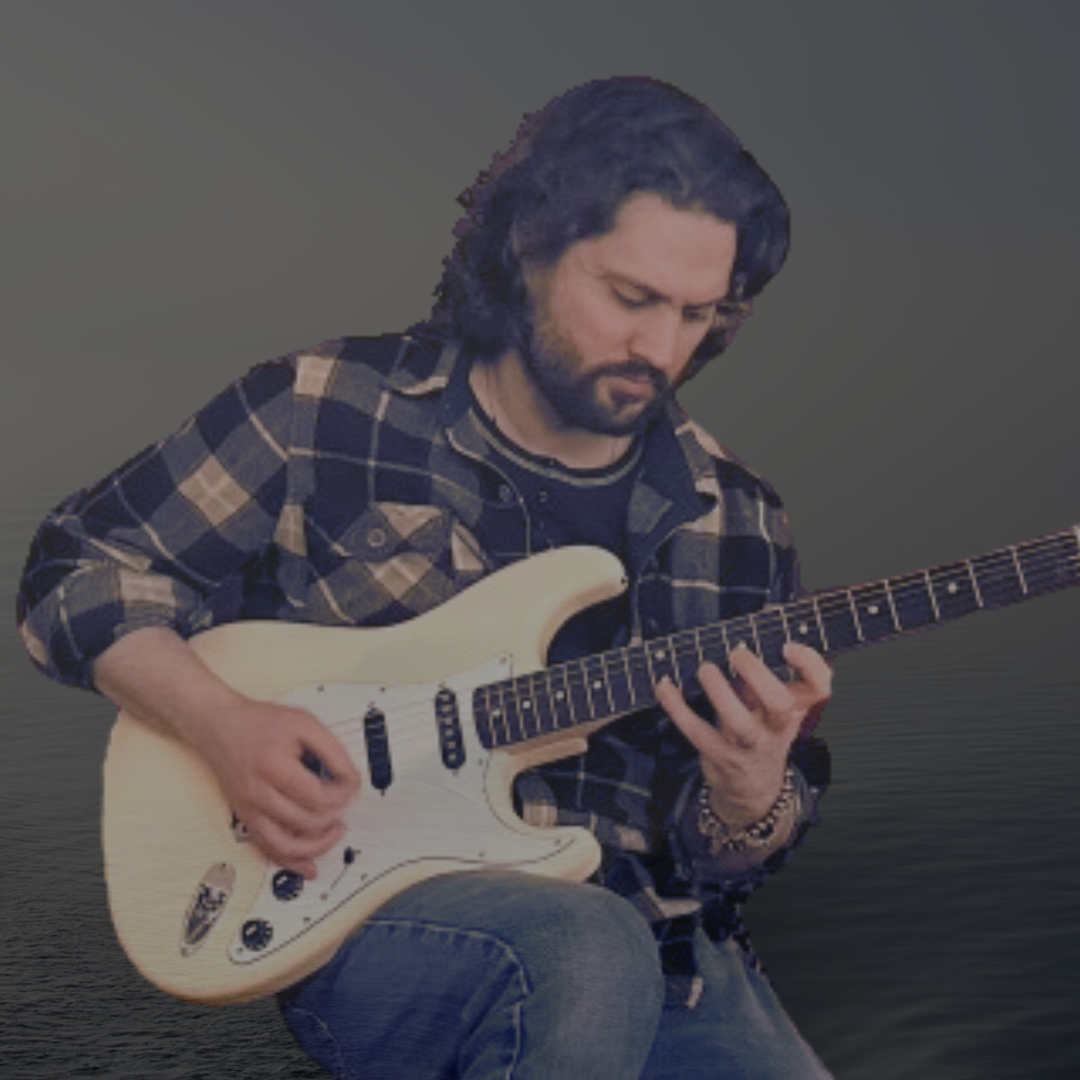
The analogy is quite stark. Musical relationships are mathematically objective. Moreover, any musician can access the relationships contained in a score or piece, but living music requires a musician’s interpretation of those relationships. One performer may bring one aspect of a work sharply into focus, while another performer may bring a different aspect into focus. The musical work remains one, just as Leibniz’s town and universe remain one.
In other words, living music folds objectivity and subjectivity together. There is no gap between them; rather, they are two aspects of the same thing.
Works Cited
Cavallo, Andrew M. “Introduction to Monadology.” Andrew M. Cavallo, andrewmcavallo.com/monadology.
Leibniz, Gottfried Wilhelm. The Monadology. Translated by Robert Latta, 1898, sections 56–57. Public-domain edition, Wikisource.